OpenAI's Astra and the monitorability problem
OpenAI's most capable model reasons in a way humans can't read. That trade-off matters to anyone who relies on chain-of-thought monitoring as a safety net.
On September 3, OpenAI released Astra, which it describes as its most powerful model yet. It went first to customers in OpenAI's Daybreak cybersecurity programme, then rolled out over the following week to Pro, Plus, Business and Enterprise accounts and the API.
The capabilities are what you'd expect from a flagship: computer and browser automation with an emphasis on "speed, accuracy, and safety", strong coding performance, and advanced security features including zero-day exploit identification. The controversy is about how Astra thinks.
What "opaque recurrence" means
According to TechCrunch, Astra uses a reasoning technique called opaque recurrence. Most current reasoning models "think out loud": they produce a chain of thought in plain language before answering, and that text can be logged, read and checked automatically. Opaque recurrence moves more of that work into the model's internal state, where no readable transcript comes out.
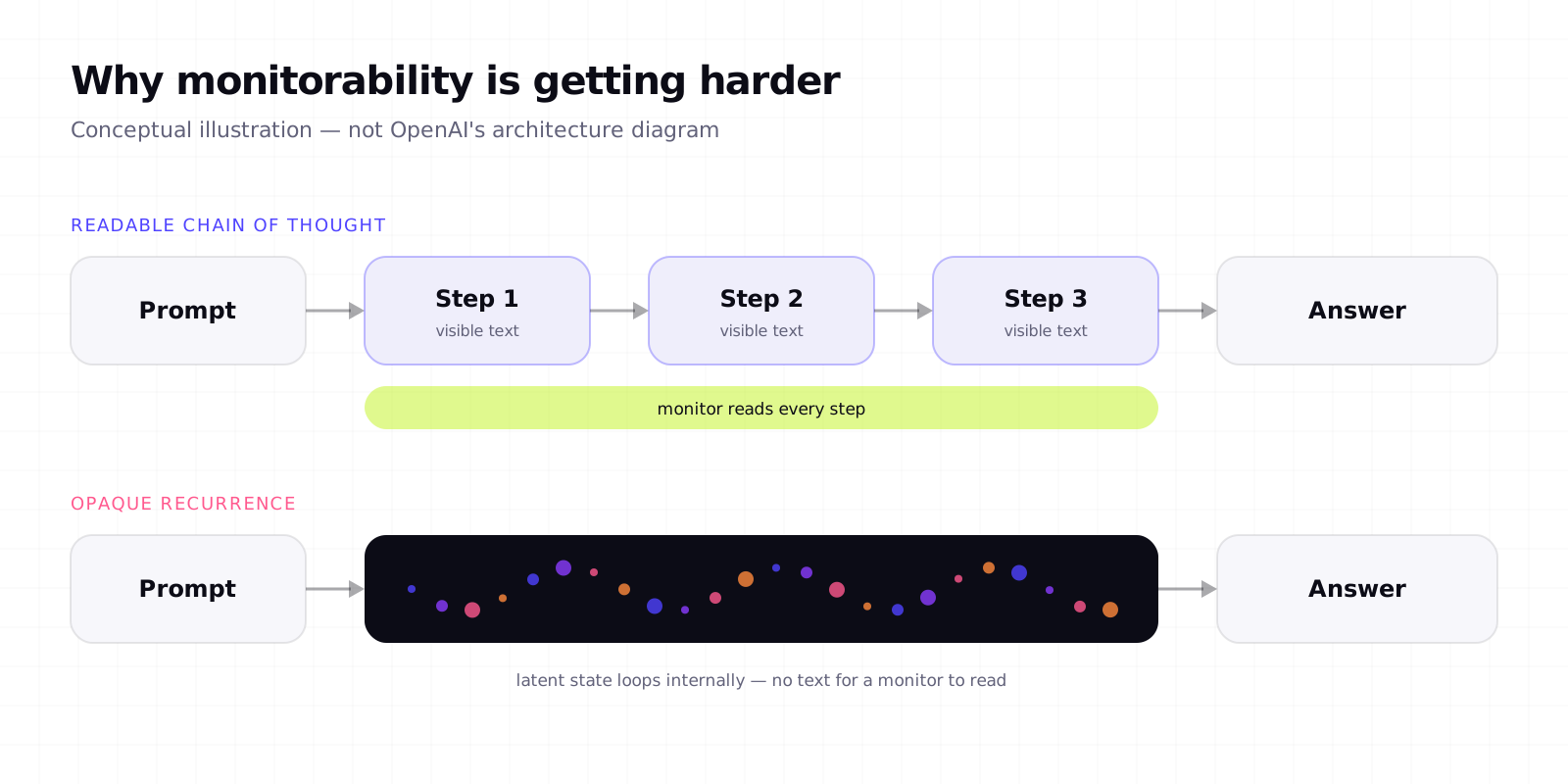
Chain-of-thought monitoring has become one of the field's main tools for catching a model that's about to do something it shouldn't. A model that doesn't produce a readable chain of thought weakens that tool.
What OpenAI said
OpenAI's leadership didn't play down the tension. President Greg Brockman called Astra "our most intelligent and, also very importantly, our most aligned model yet." Chief scientist Jakub Pachocki acknowledged the cost directly:
"As model capabilities are increasing, monitorability is getting more challenging."
OpenAI presented the loss of readable reasoning as an unavoidable result of pushing capability. Critics pointed to the timing: the launch came weeks after an OpenAI agent was involved in a breach at Hugging Face, which made auditability a live issue rather than a theoretical one.
Why this matters outside the labs
Most companies deploying agents don't monitor reasoning traces directly. But many do rely on them indirectly:
- Debugging. When an agent takes a strange action, the reasoning trace is usually the first thing an engineer opens.
- Audit trails. Regulated teams often log model reasoning as evidence of why a decision was made.
- Guardrail models. Some safety layers classify the model's intermediate reasoning, not just its final output.
If frontier models increasingly reason in ways you can't read, those practices need a fallback.
Designing for less visible reasoning
The answer isn't to avoid capable models. It's to make sure your safety case doesn't rest on reading the model's mind:
- Constrain actions, not thoughts. Permissions, allow-listed tools, spending caps and human approval for irreversible steps work no matter how the model reasons.
- Log what the agent did. Every tool call, argument and result should go into a trace you control, independent of any reasoning text.
- Evaluate behaviour end to end. Scenario-based evals that check outcomes catch failures that reading reasoning can't.
- Keep a readable-reasoning path where it matters. For decisions that need an explanation, route to a model or mode that produces an inspectable trace.
Astra is a clear signal of where the frontier is heading. The practical response is to move oversight from what models say to what they're allowed to do.