Four labs, four days: September's frontier model wave
Anthropic, Google, Meta and OpenAI all shipped new models in the first week of September, each paired with new pricing and a restricted cyber variant. A field guide to what launched.
Model launches usually come one at a time. In the first week of September 2026 they came four at once. Anthropic, Google, Meta and OpenAI each shipped a new model between September 1 and 3. Each release came with pricing changes, and several came with a separate, restricted variant for cybersecurity work.
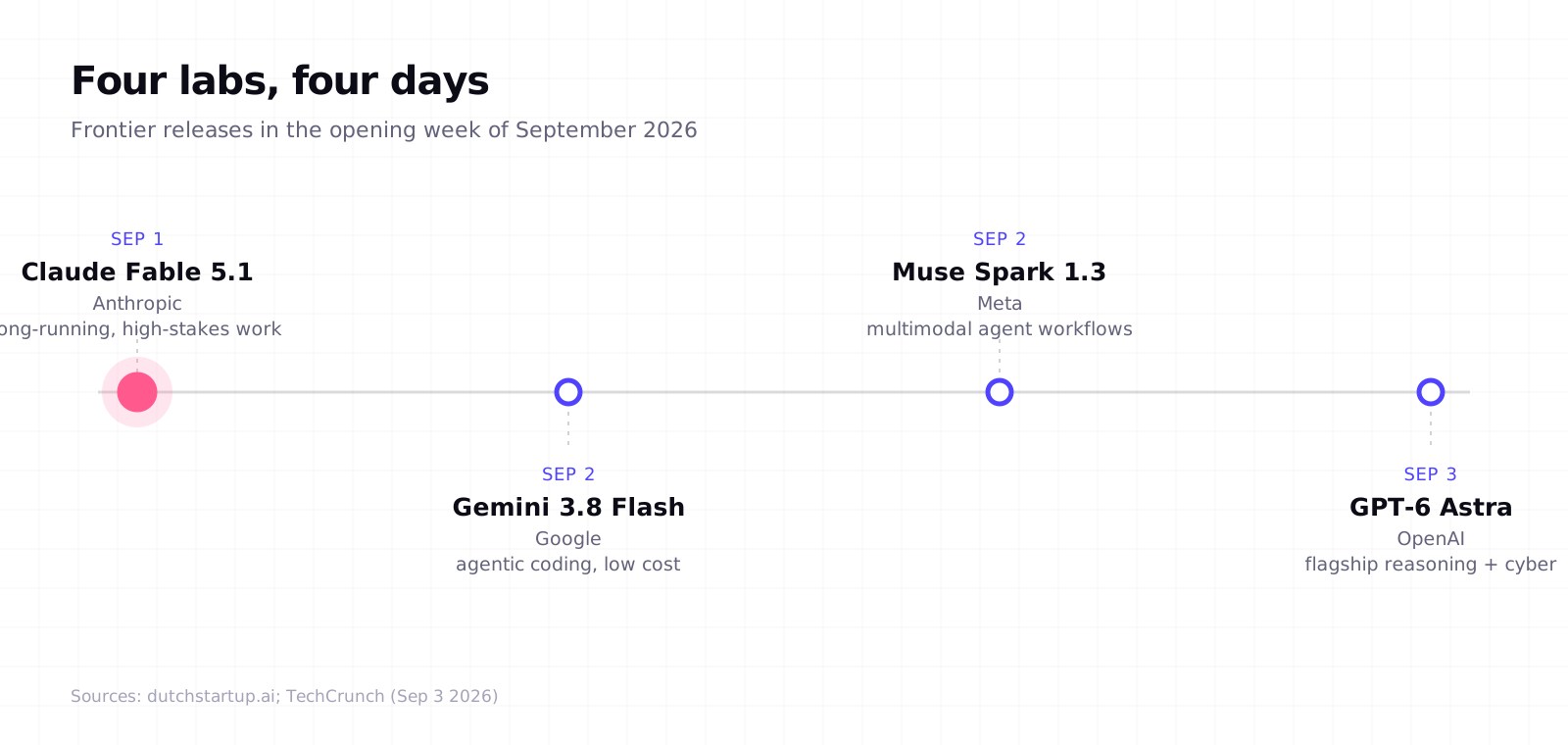
Claude Fable 5.1 — Anthropic, September 1
Anthropic opened the week with Claude Fable 5.1, built for long-running, high-stakes tasks that span hours and several applications. Base prices didn't change, but cache-read pricing dropped 75%, which Anthropic says works out to about 25% lower costs for typical workloads.
It shipped alongside Claude Mythos 5.1: the same underlying model with lighter safety constraints, available only to vetted organisations.
Gemini 3.8 Flash — Google, September 2
Google's Gemini 3.8 Flash targets software engineering, agentic tasks and multi-step reasoning. The introductory price is $0.75 / $3.75 per million tokens through December 31, 2026, and it doubles on January 1, 2027. A Gemini 3.8 Flash Cyber variant for vulnerability detection is limited to trusted defenders.
Muse Spark 1.3 — Meta, September 2
Meta's Muse Spark 1.3 is built for agent workflows with text, image, video and file input. It costs $1.25 / $4.25 per million tokens. The unusual part is a contributor rate of $0.10 / $0.20 for customers who agree to let their usage feed training. Meta says the model makes about 20% fewer tool calls and uses about 25% fewer tokens than its predecessor.
GPT-6 Astra — OpenAI, September 3
OpenAI closed the week with Astra, which it calls its most capable model yet. It costs $10 / $50 per million tokens, rising to $20 / $75 for long-context requests over 272K tokens. The advanced cybersecurity features are limited to OpenAI's Daybreak access programme. Astra also brought a debate about auditability, which we cover separately.
How they compare
In reported scores on the Artificial Analysis Intelligence Index, Fable 5.1 led at 66. Astra and Muse Spark 1.3 (in its highest setting) scored 61, and Gemini 3.8 Flash scored 59 at high reasoning. Most of these aren't meant to be each lab's biggest model. They're workhorses, cheap and fast enough to run all day on coding, research and agent loops.
Three patterns worth noticing
- Cyber capabilities now ship behind a gate. Google, OpenAI and Anthropic each released a restricted variant or a gated feature set for security work. Expect "who gets the unrestricted model" to become part of vendor due diligence.
- Pricing is now a strategy, not a list. Introductory rates, contributor discounts, long-context surcharges and cache discounts mean the sticker price rarely matches what you actually pay. Model your real traffic before you commit.
- The gap is closing. A seven-point spread across four vendors means the best model for your task is an empirical question. Portable prompts, tool schemas and eval suites are what make switching cheap.
What we're telling clients
Don't rebuild around whichever model launched last. Build around an evaluation harness and a routing layer, so a week like this one is a config change, not a rewrite.